
5 Grounding Techniques for Managing Anxiety

Photo by Leighann Blackwood on Unsplash
Understanding Anxiety

Photo by Baptista Ime James on Unsplash
Letting go of worries—simple techniques to manage anxiety.
Anxiety is a response that we experience in both our minds and our bodies when we encounter situations that are stressful, dangerous, or unfamiliar. A certain level of anxiety can actually be helpful, as it increases our awareness and alertness in challenging situations. However, anxiety can also produce uncomfortable symptoms such as increased heart rate, rapid breathing, muscle tension, sweating, racing thoughts, and difficulty concentrating.
What Are Grounding Techniques?
For some people, these thoughts and feelings can become overwhelming. Grounding techniques for anxiety are simple exercises that allow us to regain control of overwhelming thoughts and emotions by focusing our attention on the present moment. These exercises are quick, practical and can be used almost anywhere.
In this article, we will explore five grounding techniques:
The 5-4-3-2-1 technique
Deep breathing
Physical grounding
Mental grounding
Progressive muscle relaxation
By shifting the focus from anxious thoughts to physical sensations or to the present moment, we can calm the nervous system, reduce racing thoughts and rumination, and improve our ability to manage our emotions.
#1 - The 5-4-3-2-1 Technique
The 5-4-3-2-1 grounding technique is a quick way to bring your attention back to the present moment. This exercise encourages you to engage your five senses by noticing things around you.
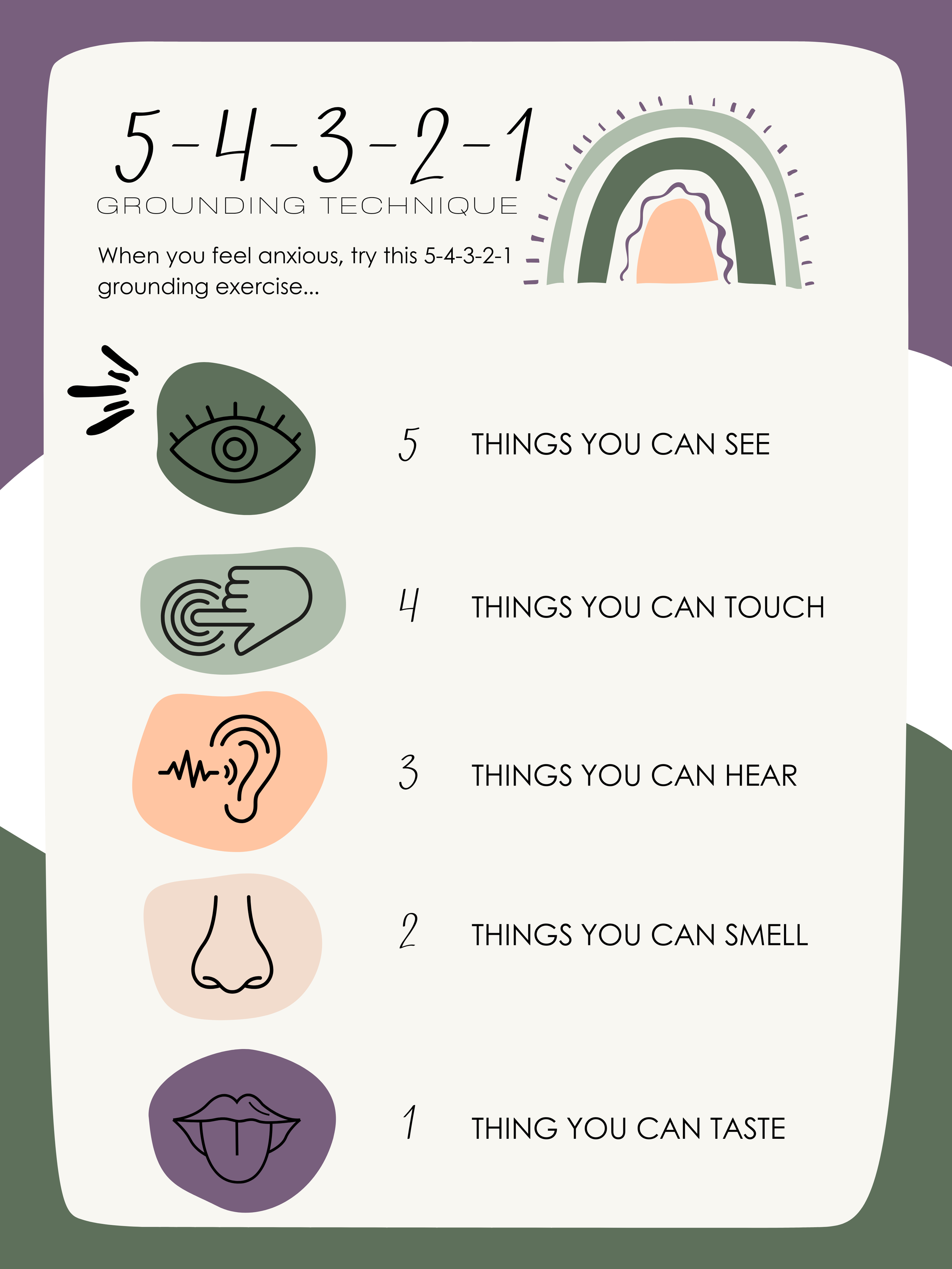
5 things you can see
4 things you can touch
3 things you can hear
2 things you can smell
1 thing you can taste
Sometimes the tasting step can be a bit more challenging. If you often experience anxiety, it may help to carry gum or candy with you. Even noticing the taste of the air or how it feels on your tongue can work.
Try not to get too caught up in remembering the exact order of the senses. When feeling overwhelmed, it can be difficult to recall specific patterns. Think of it as simply a guideline. As long as you remember 5-4-3-2-1 and engage your senses, you are doing the exercise correctly.
#2 - Deep Breathing: A Simple Exercise to Calm Anxiety Quickly
Photo by sidath vimukthi on Unsplash
When we are feeling relaxed, we naturally take slow, deep breaths. However, when anxiety increases and the body enters a fight-or-flight response, breathing often becomes rapid and shallow. Deep breathing helps counteract this by sending signals to the brain that it is safe to calm down.
You can practice breathing deeply by:
Inhale slowly through your nose for 5 seconds, noticing the feeling of air filling your lungs.
Hold your breath for 5–10 seconds.
Exhale slowly through your mouth for 5–10 seconds.
Some people find it helpful to imagine breathing through a straw, which naturally slows the process. Repeat this cycle until you begin to notice a sense of calm returning.
Deep breathing is one of the fastest ways to calm anxiety because it directly regulates the nervous system.
#3 - Mental Grounding Exercises to Stop Racing Thoughts
Mental grounding exercises help redirect your attention away from the anxious thoughts back to the present moment.
Examples of mental grounding exercises include:
Counting backward from 100, and making it more challenging by counting by sixes or sevens
Reciting song lyrics or a poem
Naming items in categories like foods, cities, or animals
These exercises require focus, which helps interrupt the cycle of anxious thinking.
#4 - Physical Grounding Techniques for Anxiety
Physical grounding techniques create a sense of safety and stability by focusing on bodily sensations. When we engage our senses through the body, we naturally reconnect with the present moment.
Examples of these kinds of exercises include:

Photo by Nathan Dumlao on Unsplash
Putting your hands in cold water, focusing on the temperature and how it feels
Splashing cold water on your face
Holding an object and focusing on its texture - modelling clay, like Play-Doh or a small textured object could be helpful.
The goal is to pay attention to the physical sensations you experience. These exercises are especially useful because they can often be done quietly and discreetly, even in public settings like work, school, or social situations.
#5 - Progressive Muscle Relaxation
Anxiety often increases tension in the muscles, which can lead to soreness and stiffness in the body. Progressive muscle relaxation helps us to become aware of this tension and release it by intentionally tensing and relaxing different muscle groups.
The exercise works through the body in sequence: start with the feet, move to the legs, continue to the torso, then the arms and shoulders, and finish with the neck and head.
For each muscle group, gently tense the muscles for a few seconds and then slowly release them. With practice, this technique helps build awareness of where tension is stored in the body and develops the ability to relax those muscles more effectively.
Practicing Grounding Techniques
While grounding techniques are helpful during moments of anxiety, practicing them even when you are not anxious can be beneficial. Regular practice makes them easier to use when you truly need them.
These exercises also encourage mindfulness, helping us stay present and fully experience life through our senses.

Photo by Naira Babayan on Unsplash
It’s important to find the techniques that work best for you. Some people may benefit more from breathing exercises, while others prefer sensory or physical grounding techniques. You may also find it helpful to combine several techniques together.
Be patient with yourself. Like any skill, these practices improve with repetition.
When to seek additional support
Grounding techniques for anxiety can be helpful tools. However, they are not a replacement for professional support. If anxiety becomes persistent, interfering with daily functioning, it is important to seek help from a qualified mental health professional.
If you know someone who struggles with anxiety, sharing helpful tools can make a real difference. Consider sharing this article with a friend or saving it so you always have grounding techniques available when you need them.